Showing posts with label punk. Show all posts

Sunday, June 29, 2014

Inside – Inside (1996)


The first Inside album.

Tracklist:

1. Liquify (4:32)
2. Destination 2000 (2:38)
3. Never You (3:01)
4. Landscaping (3:16)
5. Unsound (1:59)
6. Inside (3:38)
7. Corners (4:17)
8. Q&A (3:07)

Inside – Inside (1996) 320kbps

Sunday, June 15, 2014

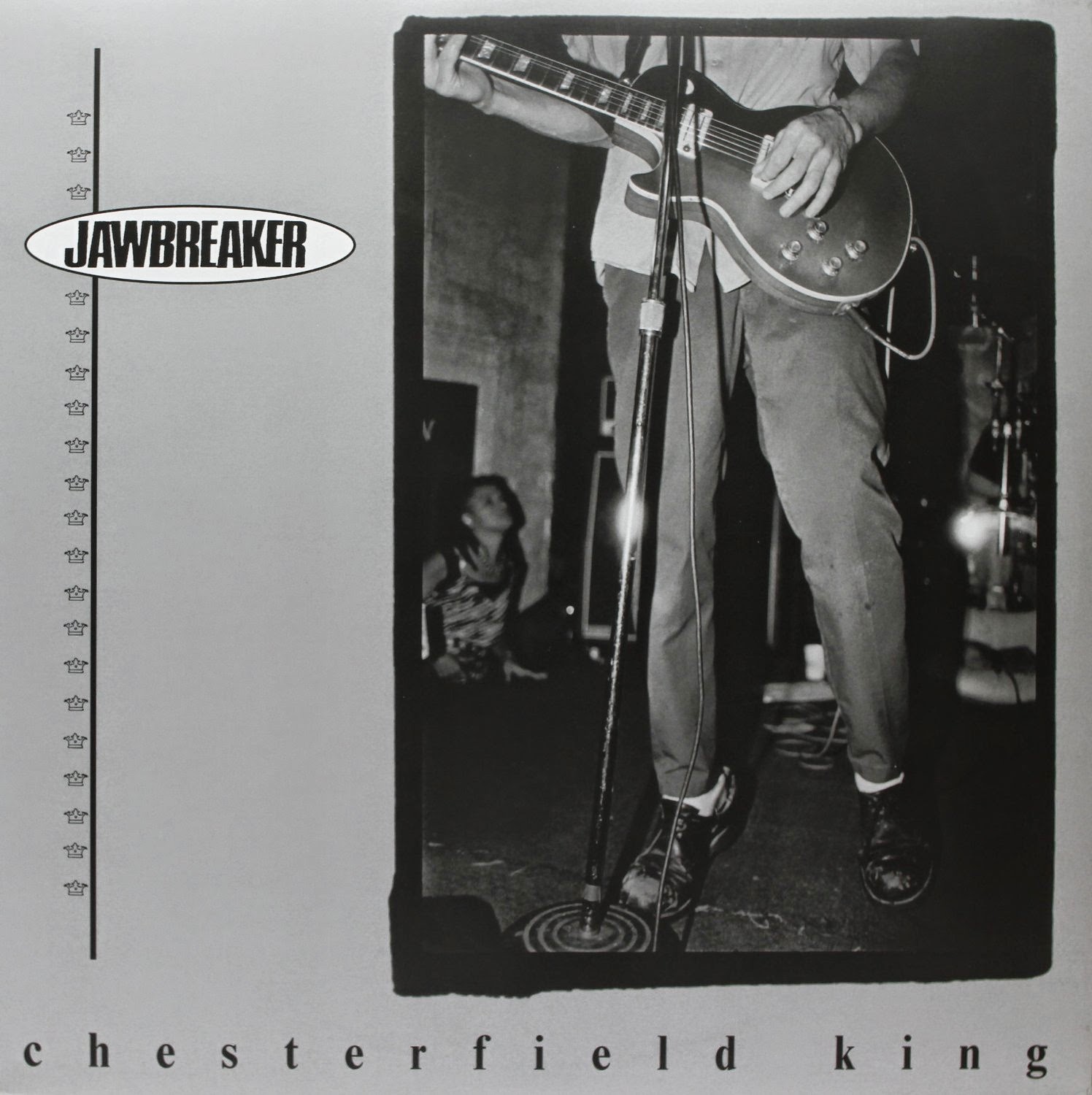
Jawbreaker ‎– Whack & Blite E.P. 7" (1989) + Chesterfield King 12" (1992)


Tracklist: 
A1 Lawn
A2 Crane


 Tracklist:
A1 Chesterfield King
A2 Tour Song 
A3 Face Down
B1 You Don't Know...
B2 Pack It Up 

Chesterfield King 12" (1992) 320kbps

Jawbreaker ‎– Dear You (1995)


1995's Dear You finds Jawbreaker cleaning up and streamlining their punk-pop sound and coming up with a sleek, slick punk-grunge classic that relies as much on clever songwriting and restrained emotions as it does on the group's trademarked high-energy attack. From the opening chords of the anthemic "Save Your Generation," Blake Schwarzenbach's vocals are the star. He was coming off of throat surgery that robbed him of a lot of his vocal power but gave him a smoky intimate sound that gives the feeling that he is whispering right in your ear. On songs like "I Love You So Much It's Killing Us Both" or "Jet Black," he sounds wounded in a way that screaming could never convey. The album is a powerful mix of jumpy punk-pop like "Bad Scene," "Everybody's Fault," "Fireman," and the aching "Chemistry" and mid-tempo tracks like the amazing "Jet Black," "Million," and "Basilica that escapes being tied to the time of grunge-by-the-numbers by being melodic and heartfelt without going over the top, by being just punk enough to be real and just epic enough to rise above the often boringly earnest approach of too many punk bands. Along with Weezer's Blue Album, Dear You is one of the cornerstones upon which emo and late-'90s punk-pop were built. Certainly Jimmy Eat World wore out their copy, as Bleed American sounds like a less produced younger brother, and Dashboard Confessional's whole oeuvre sounds like a lesser version of Dear You's acoustic "Unlisted Track." Depending on how you feel about emo, there is either a lot to blame Jawbreaker for or be thankful for here. Either way, Dear You is one of the best rock records of the '90s and a fitting last testament to a great band.
Tim Sendra
allmusic.com
 
Many modern day emo bands will not hesitate to declare Jawbreaker one of their biggest influences, however Jawbreaker is far from being an emo band themselves. It is true that the majority of their songs are about some sort of relationship trouble, but their musical style is a far cry from any form of emo both old and new. With Jawbreaker's final release "Dear You" in 1995 a completely new sound was born that many bands have since tried to duplicate. None of these bands, however, have managed to produce a sound even close to Jawbreaker's. At times it is a sound packed with raw intensity, at other times it is a mellow sound with intricate melodies. A constant in all of the tracks on "Dear You" is a sincere and genuine emotional edge in all of Blake Schwarzenbach's vocals. This is the quality of Jawbreaker's sound that other band's are unable to duplicate. The pinacle of Schwarzenbach's emotional connection to the music an be heard in the track "Jet Black." You can litterally hear the despair in his voice amidst a musical backdrop that cannot come close to matching th vocals in emotional intensity.

The trouble with "Dear You" is that for the most part the tracks sound the same. True, there are slow quiet songs and fast loud but the quiet songs sound like the other quiet songs and the fast songs sound like the other fast songs. I fact almost all of the songs on the album follow the same pattern: A brief intro, a verse, a repeat of the verse, a chorus, a quick solo or interlude, another verse, another chorus, occasionally there is another solo here, and an outro.
The tracks sound so similar that during my first week of owning the album, I would litterally think I was listening to one track only to find out that I was listening to an entirly different one later on in the song. Not only do the songs on "Dear You" sound similar to each other, they sound similar to songs on other Jawbreaker albums. The first part of the chorus in "Save Your Generation" sounds almost identical to the chorus in the song "Chesterfield King" off of Jawbreaker's first album "Bivouac."

Another with Jawbreaker is that aside from the vocals, the musicians rarely showcase their abilities as musicians. Most of the songs are nothing but simple power chords and basic drum rythms. Occasionally there is a complex drum or guitar part but more often than not it's just mediocre musicianship. Lyrically, however, the album is outstanding. Though most of the lyrics are about relationship trouble they somehow don't come off as whiny as emo music does, largely due to Schwarzenbach's unique voice, and I find that it is easy to relate to the lyrics, something difficult for me to do with emo bands.

The highlight of "Dear You" would have to be the final track, which is simply titled "Unlisted Track." Honestly it would probably sound the same as all of the other tracks if not for the fact that it is played on an acoustic guitar.

Jawbreaker's final album "Dear You" is to this day a great example of modern pop punk and is a truly unique album from a truly unique band. Though the tracks sound the same a redeeming quality is that the sound is so unique that it really isn't too much of an issue. Despite the tracks' simalarities and mediocre musicianship i award Jawbreaker's "Dear You" with a 4/5
HorrorPunk
sputnikmusic.com

I don't feel the review section would be complete without someone saying something about this album. Yes, it was the first major label release by Jawbreaker, and their last release of new material as a band, but it still ranks in my top five albums I own. "Dear You" was also the bands first try at crystal clear production. It did cahnge the sound of the band a little(or a lot), but the songs are what really matter(although it would be cool to hear the same songs with the same production as on 24 hour or Bivouac).

These Jawbreaker tunes are shining examples of the bands style. Some are upbeat punk rock songs with odd chord and tempo changes, and some are the heavier alt-rock that could be considered the "grandfather of emo" type songs.All the songs overflow with Blake's poetic and meloncholy lyrics. Some may seem overdone, but if I could convey what he does with my lyrics, I'd probably have a tendancy to overdo it at times myself.

My favorite songs(if I have to pick) would be the opening anthem "Save your generation", the third track "Fireman", which I think has the best words to any Jawbreaker song, and "Accident Prone",a slower song that is soft and easy through some of it, and all out aggression in other parts.It also contains my favorite lines from any song,ever."I couldn't wait to breathe your breath,I cut in line I bled to death, I got to you there was nothing left." Other great songs are the rockin' "Chemistry", the story-telling punk song "Sluterring:May 4th", and the last track, which showcases every sound in the bands repituare, from saddened, slower easy listenin' to furious noise-core.

Some say that the major label demons killed Jawbreaker, and I wouldn't totally disagree with that, but this album is completely amazing and a must have for any fan of good, loud, thought out music with meaning. Believe it or not, I bought it when it was first released way back when for only 8.99$, and it was even at somewhere like Camelot Music. To this date, I have yet to buy an album that has influenced my musical taste as much as "Dear You". If you can find it, attain it, by whatever means neccesary.
Mark Williams
punknews.org

Jawbreaker ‎– 24 Hour Revenge Therapy (1994)


More trials and tribulations than an average episode of Melrose Place, Jawbreaker continues to explore their personal struggles on their third album, fittingly titled 24 Hour Revenge Therapy. Continuing on the Jawbreaker tradition of poetic lyrics that provide a mental image to each song, the band deals with their endeavors through music instead of wallowing in them, making this record not entirely bleak. "Do You Still Hate Me," for example, has the persona dishing out the friction of a relationship gone sour through talking to the person in question: "I wrote you a letter/I heard it upset you/How can I do this better/We're getting older/But we're acting younger." Being critiqued and ostracized from their scene during the height of their popularity was another headache singer/songwriter Blake Schwarzenbach dealt with around the time this album was released (their previous album, Bivouac, provided them with a huge cult following). This no doubt inspired the song "Indictment," which talks about not caring what anyone thinks of their songwriting ("I just wrote the dumbest song/It's going to be a singalong/Our enemies will laugh and be pointing/It wont bother me, what the thoughtless are thinking"). Providing the perfect flow of temperamental pop to go along with these stories is proof enough that 24 Hour Revenge Therapy is the pivot of Jawbreaker's creative output.
Mike DaRonco
allmusic.com

Review Summary: 24 Hour Revenge Therapy is not only Jawbreaker's best work, but also an emotional punk masterpiece which has helped mold the pop-punk genre as we know it today in innumerable ways.

In the modern pop-punk realm, most bands’ success can be attributed to one album which would change the face of music as we currently know it. This album was the legendary Dookie by Green Day, the primary band responsible for the explosion of the genre in the mid-nineties along with The Offspring and blink-182. But going back even further than that, it is impossible to deny the fact that Jawbreaker had a huge influence on Green Day’s music. While Jawbreaker’s first two albums, 1990’s Unfun (with possibly the funniest album art ever) and 1992’s Bivouac, both were seminal underground hits, both albums also lacked that accessibility that made their immediate predecessor, 1994’s 24 Hour Revenge Therapy, such a classic and a huge influence on the bands that created the mainstream pop-punk sound that would rein triumphant over rock radio until nasal singing, cookie monster screaming, and pseudo-emotional lyrics (which extends Jawbreaker’s influence ever further) would become the more popular sound of the two.

Musically, it is very clear that bands such as Green Day were very heavily influenced by Jawbreaker. The band was well-known for crafting catchy and simplistic melodies without becoming tepid or uninspired, something that their more popular cohorts were sometimes incapable of. With only three members in the band, and a miniscule recording budget, the band was relatively incapable of creating overly complicated music. But fortunately, in Jawbreaker’s case, this was exactly what would suit them best. Sticking to the rudimentary three-chords that so many pop-punk bands are notorious for using, they were able to create a multitude of dynamics and emotions with what little they had-something that many less talented bands even to this day attempt and fail miserably.

“Condition Oakland” is an tremendous example of the band at their creative peak, starting out with urgent and catchy bounce, before transitioning to a brilliantly emotional chorus where singer Blake Schwarzenbach wails about the pains of being lonely and misunderstood in the most sincere and honest way possible. The gem of the song though, comes during the spoken word section, where a morose poem describing some of the bleak landscape of downtown Oakland is read over a throbbing bassline, light tinkering of a piano, and a twangy, emotive guitar line. “Condition Oakland” harkens back to Jawbreaker’s first two albums, both of which attempted to be a dark and mature take on the pop-punk that was coming into prominence at the time, while adding a more sprawling, epic feel to the music. It is ironic then, that this track accomplishes all of what their first two albums set out to do better than those albums did. It stands out as one of the most artistically challenging and emotional pop-punk songs ever written.

Singer Blake Schwarzenbach is a paradox. His vocals are certainly not what one would consider traditionally great: he is very raspy and has quite an edge to his vocals. But unlike so many other vocalists with similar issues, his vocals fit the music (and to a greater extent, the lyrics) perfectly. Recorded immediately after throat surgery to rectify the damage done from his even rougher vocal work on both Bivouac and Unfun, 24 Hour Revenge Therapy shows him at his emotional peak, fitting perfectly between the nearly unintelligible vocals from Jawbreaker’s earlier work, and the over-polished, whinier delivery prevalent on the bands swan song Dear You and the similar tone of his work with Jets to Brazil (Schwarzenbach’s first post-Jawbreaker effort).

Perhaps 24 Hour Revenge Therapy’s greatest strength lies in the lyrical content. Where Schwarzenbach’s earliest work with Jawbreaker could be considered almost myopic lyrically, 24 Hour Revenge Therapy expands upon the theme of loneliness and heartbreak that pervade both Bivouac and Unfun, while also introducing many other ideas. “Indictment” is a burning satire of the rock star mentality that Schwarzenbach so obviously despises, and an ironic attack upon bands looking to write substance-free music for the sake of popularity. “Boxcar” is an outward condemnation of the label-happy punk scene which began to cry “sellout” following the progression from their first two albums and an outward cry of basically “we don’t give a fuck” towards anyone who accused them of such a thing. “Do You Still Hate Me?” is most likely Jawbreaker’s most honest and poignant lyrical work in their discography, with only their opus “I Love You So Much It’s Killing Us Both” possibly being a contender. Schwarzenbach’s lyrical work on 24 Hour Revenge Therapy is extremely personal, almost to the point of being voyeuristic, while still being quite intelligent, with heavy reliance on metaphors and symbolism, and never cliché.

24 Hour Revenge Therapy is easily the gem of Jawbreaker’s impressive discography. It shows them at their peak artistically, refined a bit from their early efforts and more streamlined, but without some of the fundamental flaws. It also catches them prior to their major label debut, Dear You, where much of the impact of the songs is lost in the radio-friendly polish used thoroughly throughout the course of the album. To say that 24 Hour Revenge Therapy is for everyone would be incorrect: Certainly many will dislike the album for valid reasons. But although not everyone is inclined to enjoy it, it is fully capable of converting many listeners of varying tastes onto a completely different genre, and has provided a key release in the development and rise of a genre that is disdained by many and embraced by many more. Without 24 Hour Revenge Therapy, it is highly unlikely that pop-punk would be where it is today, and the music scene as we know it would be a completely different landscape.

Recommended Tracks: The Boat Dreams From the Hill, Condition Oakland, In Sadding Around, Do You Still Hate Me?
Joe Costa
sputnikmusic.com

The last true Jawbreaker album in terms of availablility - Dear You being tricky to find - and in terms of play-through quality - Unfun and Bivouac both now a combination of EPs and LPs. Needless to say this album still kills any punk rock album put out from when this album was released. Not much has come close to sounding like Jawbreaker despite the rants saying that Jawbreaker formed emo or some other BS like that. Jawbreaker doesn't embody emo even for a second. It should not even be a comparison for there is no comparison to be made. Apples and oranges if you will. Punk rock took a large blow with the demise of Jawbreaker and punk will be dead as soon as Fugazi dies. You cannot tell me that the bands nowadays hold any DIY ethic with the formation of large "punk rock" labels ala Fat Wreck Chords and Epitaph. The bands sound so close to each other anyhow if not the same. The mood of 24 Hour Revenge Therapy fluctuates from joyous (The Boat Dreams From The Hill) to depressing (In Sadding Around). Kerouac no-doubt influenced Blake's writing as is apparent by the little line in Boxcar ("...by killing cops and reading Kerouac"). The included Kerouac poetry in Condition Oakland (perhaps the best song on the album) helps solidify this opinion. Every song is strong and I never find myself skipping a track for the next. Lastly, the albums layout and artwork further astonish. From the beautiful cover to the back to the inside with band pictures which aren't the sappy types found in the Fat Wreck Chords and Epitaph which proclaim "look at me having a good time with all my friends." I don't care to see your friends. Overall this album just impresses. There is no excuse for not having it. Although I'd rather you didn't so I could sit in its glory alone.
Aaron
punknews.org 

Jawbreaker ‎– Bivouac (1992)


As the principal wordsmith for Jawbreaker, Blake Schwarzenbach was one of the first songwriters in the punk scene to embrace literary lyrics more personal and challenging than the often vague or pseudo-political proclamations of the early emo scene and far more intricate than almost all of the band's West Coast pop-punk contemporaries. In their short lifespan, Jawbreaker would arc from their scrappy melodic punk beginnings (Unfun, 1990) to a polarizing major-label swan song (Dear You, 1995) with everything in between, from high-tension band breakups to extended hospital stays, vicious criticism from former allies in the punk scene, and the creation of a subtle masterpiece in 1994's Steve Albini-recorded 24 Hour Revenge Therapy. Somewhere in the center lies Bivouac, Jawbreaker's second album and easily their stormiest, gruffest material. The album came after a brief breakup brought on by a devastatingly rocky summer tour, expressed to the hilt in the horrifying lyrics of "Tour Song," with its coda of "Every little thing must go wrong." With a little time, they reunited and relocated from New York to the Bay Area, taking a good amount of city grit with them and applying it to a foundation of sophisticated guitar-based pop songs. While Jawbreaker's heart was composed of Schwarzenbach's poetic storytelling and a sense of romance so immediate it touched the music as much as the lyrics, Bivouac is more marked with musical struggle than any other of the band's albums. Aggressive songs like "Face Down" and "Like a Secret" lean more on dissonance and buried vocals than the group's usual melodicism. Bearing in mind that the landscape of independent punk in 1992 was overshadowed by a booming grunge scene, it makes sense that Jawbreaker's toughest songs on Bivouac have hints of Helmet, Gish-era Smashing Pumpkins, and other acts of the day that were in the process of blowing up. Interspersing classic young-love pop songs like the timelessly sweet "Chesterfield King" and the optimistic "Shield Your Eyes" with more angsty material gives Bivouac a searching quality, clearly made by artists grasping for identity or clarity in changing times. The ten-minute title track finds the coagulation of all the shifting elements of the album, dialing in the swirling basslines and big grunge choruses with beat poet-inspired lyrics aiming to reconcile Holden Caulfield-esque displacement and alienation from immediate family. As the song churns on it sets the scene for what would come next in the band's discography, a more digestible and confident progression in lyrical and musical development. However, the journey to that development is a rocky one, and the unhinged urgency of Bivouac is an enormous moment, and one necessary to go through in order to take Jawbreaker from their naive punk beginnings to the one-of-a-kind band they grew to be before their star burned out abruptly.
Fred Thomas
allmusic.com

Exactly how I felt, Blake. There was once promise in music, our society, and humanity in general. But all that hope is fading fast. I've seen bands use what was once the most offensive type of music and exploit it into a money making, trend setting industry.

I have seen violence and hatred plauge our planet, our country, and yes, our neighbors. Everyone knows about the 'terrorist attacks' in New York, but few know about the Siek individual(which is a completely different religion than the Muslim faith) in Phoenix Arizona U.S.A., who was murdered simply because he resembled the attackers. It is this type of blind, ignorant violence that will eventually be the untimely end of humanity.

The intesity of this Jawbreaker album can only be paralleled by Earth itself. Aggressive and up-front often, but underlying and soft at times as well. Songs like 'Chesterfield King' will go down as one of the greatest love-songs off all time(in my book anyway), while others such as 'Donatello' reach deep into the realms of saddness. 'p.s.New York is burning' is disturbingly accurate, almost a decade in advace. It is a complete rollercoaster of human emotion, from depression to rock-stardom. In high school, I was sure I would be the one to write beautifully ugly songs, intensively disgusting and yet softly ellegant at the same time. To my disgression, it had already been done.

Little did Jawbreaker know that the sloppy, ear-aching sound they were playing would eventually be over-produced, capitolized, and distributed to the masses as 'emo'. However, they took the often stagnite punk rock sound to a whole new level of experimation, intesity, and emotion, while remaining raw and unscathed.

'Bivouac', what appears to be your average, run-of-the-mill punk record, is everything but that. An unpredictable, inventive, lyrically-genius album ahead of its time.

In a day where one sees eveything he wishes he didn't see, there is an answer... 
fathead
punknews.org

With Jawbreaker's first album, Unfun, they proved themselves to be more than just a Punk band. They were energetic, dark, and with poetic lyrics that resemble the arty beat poetry of Jack Kerouac, Allen Ginsberg, and Chuck Bukowski, but with a twist that was, and is, described as emo. But on Bivouac, Jawbreaker mastered that.

Slower than Unfun, Bivouac is a look at the world from the inside out. The songs are slow shades of poetic alienation that goes a few steps above teenage poetry (a lot of steps) and perfectly take stabs at the world. "Shield Your Eyes" opens the album perfectly. It starts off with a small line of feedback, and a quick drum roll before going into the song with a great melody covered by a wall of distortion. The bass line is bouncy and the drums are perfect, but it's the lyrics that are the true catch. It tells the story of a man who looks straight into the sun, which "Lights the whole damn sky", and is blinded. "He can't do anything, Everything is a lie." That single line sums up the whole record. Unlike most bands, Jawbreaker takes an equal amount of storytelling, preaching, and self deprecating into one mix; most bands take one of those elements and just stretch it until it pops.

As always, the rhythm section of Chris Bauermeister and Adam Pfahler is top notch. They prove to be very versatile tempo-wise, and always keep up with the wall of distortion that Blake cemented into the band's sound. One of the best examples is "Face Down". The song's bass line is great; simple, yet extremely effective. The drums show an equal amount of fluency, as they aren't too fast nor too slow.

Donatello is another example of how, lyrically, Jawbreaker was the best. There's poetry, "I'm gonna cut my strings and kill the puppeteer. Then I'll walk on out of here", and in your face, to the point, one liners, "Sure you made an impression. Depression". It also features some of Blake's most passionate singing. He switches from almost whispering slurs into passionate yelps at the world. There's a short recorded spoken word interlogue as well. "When it all comes down, I can show you something you will not believe. When it all comes down, we're gonna see a real masterpiece. With an artist's eye and a killer's touch. Takes a life to make one."

So, in case you haven't noticed, I think Blake is a lyrical genius. Most punk lyricists just stood to the loud and fast rules back in those days. But Blake presented something much different, something that appealed to a whole new group of kids, waiting for the next Rites of Spring, the next wave of emo. Over the years, however, he has been mimicked by little wannabe pop-punk bands that stole the originality of it and made it, unfortunately, a bad take on teenage poetry.

One of the best songs on the album is the self explanatory, Tour Song. Despite the differing subject matter, Tour Song has the same approach as the previous songs. It shows that touring's main catch is playing, and even that is hard to get through. "Chesterfield King" is one of the lighter tunes on the album, describing an affair, but with a beat twist. "She asked me if I had a name. I told her I was glued up on some chick. We sat and smoked against the wall. Drank a beer, felt the chill of fall."

This incredible record ends with the epic, ten minute and six second, "Bivouac". Out of all the sad songs on this record, the saddest has got to be this one. Similar to The Velvet Underground's "Sister Ray", Bivouac is loose and jammy, but still with a sense of direction. The lyrics are also poetic and arty, something that could describe this record perfectly.

Most people call 24 Hour Revenge Therapy the band's best album. Which makes sense; it's the band's most accessible record before signing to a major label. So all the so called "real fans" that "stick it to the man" by not listening to Dear You, go for Revenge Therapy, the same reason all the "hardcore Green Day fans", go for Kerplunk, instead of Dookie. But I'm not going to waste my time. In my opinion, Bivouac is the band's Classic. It's dark, emotional, witty, and arty, but still with the flare of Punk rock.
Fort23
sputnikmusic.com

They never became a household name and people still think Face to Face or some shitty "pop punk" band wrote "Chesterfield King", but Jawbreaker were a huge deal for a lot of people. I remember driving from New Brunswick, N.J., to Philadelphia to bring my girlfriend a promo cassette copy of Dear You, the group's 1995 post-Green Day major label debut. It had arrived a day earlier at the record store where I worked, and I thought she'd want to hear it. I got out of the van, showed it to her; she tossed it on the ground, smashed it under her foot. Around that same time, a guy I knew from local basement shows, came into the record store, pointed to the tattoo of the Jawbreaker logo on his arm, and shook his head. He had tears in his eyes.

This was a band the underground didn't want to lose, at a time when commerce wasn't so closely intertwined with everyday listening experiences. Formed while they were students at NYU, the trio of vocalist/guitarist Blake Schwarzenbach, bassist Chris Bauermeister, and drummer Adam Pfahler relocated to Los Angeles and released their debut, Unfun, in 1990 (it was reissued by Blackball in 2010). Unfun was a good (very fun) record, a solid dose of early 90s emotional, literate punk that established the raw-voiced Schwarzenbach as an underground hero. The band went on the so-called "Fuck 90" tour with Econochrist that summer and broke up, but managed to get back together, relocate to San Francisco, and record 1992's Bivouac.

The record found them experimenting, and pushing into deeper, angrier, heavier (and headier) waters. People cite 1994's Steve Albini-helmed 24 Hour Revenge Therapy, which showed up after they played some shows in 1993 with Nirvana, as the group's pre-major label masterpiece. But Bivouac has always held a special place for me. It's their darkest collection, a sprawling, shaggy-dog set that found them transitioning from the cleaner, calmer Unfun to something grittier, wilder, and smarter. Bivouac was a ragged call to arms, 24 Hour Revenge Therapy an ambitious offering within that newer space they'd created.

Bivouac also includes one of their most beloved songs, "Chesterfield King", a poppy anthem a lot of people saw themselves in. It was a perfect punk vignette. In just about four minutes Schwarzenbach sets a scene ("We stood in your room and laughed out loud/ Suddenly the laughter died and we were caught in an eye to eye/ We sat on the floor and did we sit close") as vivid as good fiction. One of his gifts was finding a way to present specific, personal details ("Held your hand and watched TV and traced the little lines along your palms") and make them feel universal. So, here, when the protagonist cuts out to catch his breath and ends up sharing smokes and thoughts with a toothless woman in a 7-11 parking lot, you sort of remember this happening to you, too.

But it's not all love and lovesickness. From opener "Shield Your Eyes" ("There was a sun once/ It lit the whole damn sky/ It kept everything alive") onward this is an apocalyptic record filled with bigger kinds of searches, depression, and dirt. You get that soul sickness in "P.S. New York Is Burning", "Parabola"'s "I saw myself in someone else and hated them," and "Like a Secret"'s request: "Don't talk me down from here/ Let me fly this kite without a string." It shows up clearest, and more impressively, in the 10-minute closing title track's search for meaning: "I'm lonely/ I'm an only/ I learned to put on airs/ I needed them to breathe/ Today I wake up." Here, Schwarzenbach sets an earth clawing scene ("I dug my fingers in the earth/ I drew picture of my pain/ They were so pretty") punctuated by feedback, noise, and the singer's howling of the album title, a shout that hurts and brings down the shelter he's place around himself. It's a call for help, though one that doesn't need to be answered. You get the sense that it's the act itself that mattered most.

Biouvac's 20th Anniversary CD reissue, remastered by John Golden from the original tapes, includes songs from the original studio sessions: "Ache", which showd up on 24 Hour Revenge Therapy, and "Peel It the Fuck Down", which appeared on the 2002 compilation Etc. Like the original 1992 CD, this version includes the four-songs that appeared on the 1992 Chesterfield King 12": "Tour Song", "Face Down", "You Don't Know", and "Pack It Up". For those who followed the band at the time, those tracks have always felt as much a part of the tracklisting as the 9-song vinyl version. (Fittingly, Blackball has also reissued the 9-song Bivouac and Chesterfield King 12" on vinyl for the first time in years.)

One of those Chesterfield King tracks, "Tour Song", ends with the line: "Every little thing must go wrong." But, the truth is, despite things not working out exactly as planned, everything did not go wrong. People were angry when Schwarzenbach had painful polyps removed from his vocal chords and were ready to riot when, later, he cleaned up his vocal sound for Dear You. That record didn't sell well enough according to DGC standards, Jawbreaker never became the next Nirvana or Green Day, and in 1996 the group called it quits. But, in retrospect, Dear You was the right record for the band to make. (It's a great album, just not the one you wanted to hear when you were 21 and navigating a close-knit underground that hadn't dealt with this sort of thing firsthand.) So, yeah, Jawbreaker may have grown up before we were ready for them to grow up, but their music has managed to age especially well. It feels as vital now as it did two decades ago.  
Brandon Stosuy 
Pitchfork

Jawbreaker ‎– Unfun (1990)


   Jawbreaker could be easily described as a pop-punk band with more of a dark side. Not that this isn't true, but it just wouldn't do this trio any justice to their poetic lyrics and complex song structures. With Unfun, a very influential record way ahead of its time, they make a name for themselves -- not as your run-of-the-mill punk band with a verse-chorus-verse style, but rather as a band that provides fitting background to the personal side that they're not afraid to show. For example, take one of the more energetic songs on the album, "Busy," in which the person offers a helping hand to a friend on the verge of mental collapse ("When nothing seems to be quite worth it and sleep becomes the only sure thing/I'm here to help you out of it/Come and see me for a lift"). But two tracks later, self-doubt and guilt are present in "Wound": "Feel my burning rash/Old scabs on my back/Deep red welts from hating myself/I was once, once so strong." Quite an emotional roller coaster, but at the same time it gives Unfun its edge and originality.
Mike DaRonco
allmusic.com


I feel like I'm betraying an old friend by writing this review. Before he condemns me for my transgression, however, let me begin to defend myself by saying that we really haven't been in touch recently. He's been hanging around with his brothers on my shelf and I've been hanging around with newer bands, people I now find infinitely more interesting than him.

Although, having just admitted that, I realize that this review might end up seeming like I'm betraying him twice over. Not only am I unearthing our long-ago, once-vital friendship for the lone purpose of writing about him, but I'm also baldly admitting that he's become less of a friend to me. Sure, I still pull him out for a spin now and again, usually when I'm feeling like I haven't heard from him in eons, and we always have a blast. But mostly, I seem to forget about him. (If you must know, his spine is fading a bit from over ten years sitting in the sun in whatever apartment in which I happened to be living. And it's getting damn hard to read his name anymore. So perhaps it's no wonder I don't look him up more; he's literally become invisible.)

But there's also a third betrayal I'm making by committing these words to paper. I'm not going to be talking so much about my old friend's musical qualities that once brought and still bring me so much happiness for this tribute to him. True, there are tons of these qualities, probably more than will fill this paragraph—the galloping percussive bass and sustained guitar chords that open "Want", the first song on the record, the clever use of sampled dialogue in "Incomplete" and "Eye-5", the impossibly-fast drums and breathless lyrics of "Gutless"—but, uncovering him once again for the purpose of writing about him, I'm more struck by how this record has become symbolic of two things for me, one of which is easy to discuss, the other being more elusive.

I want first of all to explain how this record hit me when I first heard it, shortly after it was released on CD in 1992. It sounded like a perfect sonic brew of the genres I obsessed over in high school—heavy metal and college rock when "college rock" meant what the radio station outcasts (not the fraternities) were listening to—and combined the driving musical aggression of the former with the melodic sensitivity of the latter. Like the rap music I was also listening to at the time, its lyrics were personal and intelligent. (For evidence of this, listen to "Busy". Its eager awkwardness comes across as strangely coherent; it's like having a wee-hours drunken conversation about the profundities of the world that lasts well into the rest of your life.)

That paragraph, though, is all musical evaluation; it would do well to be summarized in the following statement: Unfun sounds pretty much the same right now as it did then.

So why am I wasting finger movements and stomach acid trying to write about this record? Well, this is where the elusiveness begins: it was my introduction to the punk rock/d.i.y. music community. This community was one of which I was utterly ignorant; only later, when I became submerged in it, did I realize that it existed outside of the confines of the mainstream that I did know. A friend in college (a real flesh-and-blood friend, not an aluminum disc friend) who was in a punk band introduced me to the record, telling me it was one of his favorites. In order to find a CD copy for myself, since I wore out the cassette copy I made of his, I scoured the copies of Maximum Rock N Roll that he loaned me and went with him when he went to independent record stores and punk rock shows. After I found the record, things just seemed to blossom.

Now, I could go on and on about the bands I started listening to, the shows I started seeing, the people I started meeting, the friends I started making. This would clearly demonstrate my total Jawbreaker-sparked engulfment by this outsider community (and thus make for good writing). But the point I want to make is one that's more difficult to argue (and thus make for not-so-good writing): this record is doubly symbolic for me. It's representative both of my gateway into the musical community of punk rock/d.i.y. and into the ideological community of punk rock/d.i.y. culture.

So at what point did listening to punk rock music lead to a change in my cultural world-view or ideology? How does consuming a product of a certain public culture lead to a personal ideological change? What were the specific steps by which this happened to me? I know that it wasn't Jawbreaker's music or lyrics alone on the record that did it. Nor was it the hundred or so bands that I discovered as a result of the record. Nor was it any one of the friends I made, the books I read, the movies I saw, the papers I wrote, the thoughts I thought, or the things I said since those months in 1992 when my mind and world opened up for the better.

As close to an epiphanic moment in this tribute as I'm going to reach, those last few sentences are pretty cringe-worthy. But writing about Unfun as a specific cultural product of a specific place and time in my life that has had lasting effect just feels right fucking on. I'm sure my old friend would approve. 
Anthony C. Bleach
popmatters.com

There really is no definitive album in Jawbreaker's discography, but in that sense, Unfun may be just as crucial as anything else in their catalogue.

The spectacularly heralded, endlessly romanticized Bay Area punk band produced four full-lengths with so many widely ranging points of contention among critics and fans regarding the band's musical trajectory and career decisions, it's left no one album to claim as the band's essential. If you ask Allmusic, they'll tell you 1993's 24 Hour Revenge Therapy is tops, with 1995's Dear You and 1990's Unfun in close range. Ask Steve Albini and he'll call it a "decent, if standard pop punk record of the type that was pretty common in the mid-90s"--and he produced the fucking thing. And if you navigate to Pitchfork, you'll see they took the time to shit all over Dear You--twice--before qualifying this recent reissue of the band's debut LP as "irrepressibly fun." Less jaded fans are probably prone to calling Dear You the classic; scene fixtures and musicians like Bob Nanna tend to place 24 Hour on said pedestal. In this reviewer's opinion, the band seemed to improve with every passing release (though the pronounced remaster on Unfun begs to differ the merits of said evaluation).

Still, though, trying to regard a place for Jawbreaker's first full-length within the canon of their catalogue seems near impossible, but that vague notion of status also makes it a little more vital to the full "Jawbreaker experience." In turn, perhaps that's what warrants a proper reissue of Unfun. Blackball's redux offers a remaster of the entire record, along with a bonus track--the 7" mix of "Busy." The band's 1989 EP, Whack & Blite, is here too, though it appeared on all original CD pressings anyhow. I don't believe the original 7" liner notes were replicated in the original Unfun booklet, however, and here they're represented for perusal in all their Xeroxed glory. Sound-wise, the remaster seems to add a little more "pop" to the overall mix; the percussive nuances are more distinct as well. As for the alternate "Busy" offered, Blake Schwarzenbach's voice seems a little sharper and the bass is turned up a bit, but it's largely not all that different.

Of course, the record itself has aged incredibly well. From Schwarzenbach's macadam-encrusted yelps on fan-favorite opener "Want" and the driven, emotional thrust on "Fine Day" that would hint at a career made on heartbreaking restraint, to the nimble, distortion-dipped fingering on "Busy" and Schwarzenbach's nasal, desperate commands on "Gutless" not to fall behind, its unfiltered, raw surge seemed relentless. Sure, the melodies were a little unrefined and the songs often stagnantly operated on the same rough, tumbling plane, but it still made for a bustling, impressive debut all the same. That it was a mere foundation for the ambitious, big hooks of 24 Hour and the polished moroseness of Dear You hardly hurts its relevance--Unfun was where they had the forward charge but still knew to occasionally proceed with caution. And hell, Whack & Blite closer, "Eye-5" was easily one of the most memorable songs in the front half of the band's catalogue, spiraling into an epic, sound clip-laden finish the band would rarely replicate in form for years.

So perhaps the minor bonus features here themselves are what makes Unfun just a little more essential, but the Jawbreaker chronology is still so overanalyzed and prodded at that missing out on any point could very well be remiss.
Brian
punknews.org

   San Francisco's Jawbreaker straddled a pivotal moment when emo was a "core": halfway between insult and genre, hardcore and pop, underground and mainstream. Their lyrics stressed both punk principles and emotional outpourings. Their music was furious but catchy, with a set of mannerisms that flowed smoothly into indie-rock, pop-punk, and alt-rock: palm-muted power chords laced with bright octaves and harmonics; guitar leads rounding off into whistling feedback; counter-melodic bass lines; and epic breakdowns with arty sampled monologues. They had lofty ideals, but their songs walked around on the streets, sullen and pissed, with fresh scabs and dog-eared volumes of Bukowski in their back pockets.

The phrase "emo-core" itself is a problematic compromise between hardcore and pop-- an angst-inducing identity for a young band. Blake Schwarzenbach was 22 when Jawbreaker's 1990 debut, Unfun, came out, and this was but one of the pressures that drove him. Recriminating tunefully through a shredded throat, he calibrated himself against a punk scene and adult world of coequal injustice. Unfun was Jawbreaker's punkest record, but he feared it wasn't punk enough: "Sorry we ain't hard enough to piss your parents off," he snipped on "Incomplete". His fretful intelligence often led him to dispense free psychological evaluations and strawman parables. There are many issues-based songs: "Softcore" is anti-porn, and "Seethruskin" is anti-racism. It gets almost Orwellian: "Don't think that I ain't counting all the things you do," Schwarzenbach bristles in scene-cop mode. (He always loved those sassy "ain'ts.") To that extent, the record earns its title.

Yet the music itself is irrepressibly fun. Drummer Adam Pfahler was a fucking behemoth, a whiz with galloping toms and breathtakingly long fills. He sounds great on this low-end boosted reissue, which, on CD and download, also includes the formative Whack & Blite EP. And Schwarzenbach's prickliness was ultimately sympathetic, because it stemmed from a vulnerability he laid bare in songs like "Want", where dark secrets are exorcised in the name of love. "So now you know where I come from," he sings, underlining it twice for emphasis: "My secret's come undone/ My heart reveals my cause." The world is fallen, but he's not dancing on the wreckage. He's looking for survivors, imploring on "Busy", "We're all close to the end; don't you need a friend?/ Honor your allegiances!"

By 1995's major-label but still-fierce swan song, Dear You, Jawbreaker seemed wholly out of step with the scene that revered them; a broken lineage made painfully clear by the terrible cover versions modern emo bands produce. Schwarzenbach managed one pretty great album with Jets to Brazil, Orange Rhyming Dictionary, before petering out into mojo-less soft rock. With reunion and documentary rumors rumbling, Jawbreaker is primed for renewed attention, though one wonders what emo fans raised on Dashboard Confessional, Warped Tour, and Vagrant Records will make of their pinched, petulant sound. Regardless, the original music stands tall. On Unfun, Jawbreaker's conviction that punk could open up to pop while staying hardcore burns more urgently than ever, in the retrospective light of futility.
Brian Howe
Pitchfork


Saturday, March 15, 2014

Various Artist – In-Flight Program - Revelation Records Collection '97 (1997)


Tracklist:

1. Sense Field - Building (1:35)
2. Texas Is The Reason - Back And To The Left (3:55)
3. Farside - Audience (3:37)
4. The Iceburn Collective - Sphinx (4:36)
5. Shades Apart - Fearless (2:53)
6. Chain Of Strength - True Till Death (2:22)
7. Whirlpool - Wasteland (2:37)
8. Chinchilla - Decoder (4:26)
9. Bodyjar - Glossy Books (3:51)
10. Ignite - Embrace (2:22)
11. Sparkmarker - Chrysanthemum (3:15)
12. Youth Of Today - Break Down The Walls (2:05)
13. No Fun At All - Master Celebrator (2:53)
14. Gorilla Biscuits - New Direction (2:13)
15. State Of The Nation - A Piece (2:48)
16. Beta Minus Mechanic - Sandcastles (2:57)
17. Quicksand - Omission (2:24)
18. Underdog - Say It To My Face (2:12)
19. Judge - Bringin' It Down (1:50)
20. Supertouch - Vendor (2:54)
21. Inside Out - No Spiritual Surrender (2:57)
22. Shelter - Enough (1:54)
23. Burn - Shall Be Judged (2:18)
24. Into Another - To Be Free (3:15)
25. Bold - Looking Back (2:13)
26. Engine Kid - Windshield (3:23)

Various Artist – In-Flight Program - Revelation Records Collection '97 (1997) 320kbps

Thursday, January 30, 2014

Saves The Day ‎– Stay What You Are (2001)


On request

Here goes a rendition the classic music critic gripe:

If the world was a "just" place (oh silly critics) Saves the Day would have the career of Fall Out Boy, only with way more credibility. 2001's Stay What You Are is the most radio-ready emo album there is and it's not even that close. It's melodic bliss, yet somehow it just didn't click. Saves the Day was just four years too early. The album came out in the height of pop punk's infiltration of mainstream teen culture, and this album just didn't fit the mold of the Blink-182s and Sum 41s of the world. But hey, as a music listener, I'd prefer that an albumbe unappreciated and great than known and unlistenable.

Atypically, the album begins with a funeral on the aptly titled "At Your Funeral." The track is not as melancholy as one would expect, in fact, musically it's bouncy. Like most of the songs on Stay What You Are it emotes more bitterness than sorrow. The follow-up "See You" features leadman Chris Conley at some of his lyrical best, with vivid imagery that is instantly relatable:

"My gut is burning. Won't you find me some water?
Hey, just forget it can you bring me gasoline
and collect a couple forks, hold them three feet apart
and wait for lightning to strike to burn me up?
Cause I don't think that I have got the stomach to
stomach calling you today."


"Cars & Calories" almost seems like a premonition listening back on it now. It's vicious attack on the falseness of celebrity culture and the obsession with appearance is like a direct critique of people's fascination with tabloids and "reality" TV shows like The Hills. Conley's lyrics continue to shine on "Jukebox Breakdown," which explores the very cool idea of what it means to be a singer through means of an extended jukebox metaphor.

The ballad "Freakish" is the kind of number the band was made to play. It's hopelessly romantic swoonings encapsulate youthful heartache to a T. Maybe it was choosing this song to be a somewhat unconventional single that did in Stay What You Are's chances of success, but it's hard to buy that, because it has one of best music videos SaveFrom.net ever.

"As Your Ghost Takes Flight" and "All I'm Losing Is Me" both feature offbeat guitar parts that instantly catch the ear's attention. "As Your Ghost…" is the most morose and angry tune on the album, as Conley sings of revenge and blood drinking (another missed opportunity, the Twilight kids would eat this up). The songs are just part of the first-class musical variety that Saves the Day's members display throughout Stay What You Are.

With the album nearing it's end things wind down with "Nightingale" and "This Is Not An Exit." They are more delicate, understated tunes which gives them a bit more reflective air. It amazing more songs in the genre are not do not strive for this sound, which fits the downtrodden aesthetic so much more accurately. As Stay What You Are goes out in a glorious burst of flickering flames on "Firefly," one could bemoan a band that had every right to make it and didn't. But that misses the point. Saves the Day made an album the likes of which the bands that followed in their success can't touch. That seems just enough.
SethGrandpa
absolutepunk.net

"Hey guys, did you hear the new Saves The Day CD?"

"Yeah, it blows...what a bunch of stupid cry babies."

That has been a common reaction to the new album throughout the punk scene...

Recorded in early 2001, the new STD album, Stay What You Are, takes the band to a completely new level. If you're looking for a Can't Slow Down or Through Being Cool rehash, just quit reading this review right now. The 11 song disc begins with "At Your Funeral", an amazingly catchy, but amazingly dark song. The whole album is far darker than any previous effort by the band. 
Followed by "At Your Funeral" are, "See You", "Cars & Calories", "Certain Tragedy", and "Jukebox Breakdown." The album is so varied, it's hard to categorize it. But, labels are useless, right? As those first 5 songs pass by, you notice the change in the band. You notice the darkness, the distorted guitars. You notice a brand new band. 
"Freakish" follows after "Jukebox Breakdown", and it's just an amazing song. Words are hard to describe it. "I'll make my way across the frozen sea, beyond the blank horizon, wehre I can forget you and me, and geta decent night's sleep." If that's not sincere I don't know what is. 
"As Your Ghost Takes Flight" is next up. It's a song for the whole family. No, not really. It's a creatively violent song, which scared the poo out of me the first time I heard it, but it fits in nicely with the theme of the album. Sometimes you just have to let go, as things change... 
After that, "Nightingale" follows. By far the best song on the disc. The song is written like a dark story that you don't want to end, as is the entire album. There's just something special about "Nightingale" that will have you hitting replay over and over again. 
"All I'm Losing Is Me" continues the dark theme, and then the slow love song pops up, "This Is Not An Exit." It's a really well written song for the brokenhearted. "Firefly" ends the album, and it does it in good fashion too. Good song. 
Yes, this is the most diverse work that STD has ever done. No, you will not enjoy this album if all you want is fast paced punk. Yes, you have to have a deep mind to understand the genius in this album. 
Chris Conley has received critical praise across the board for his amazing lyrics, and vocals. That credit is much deserved, I might add. The guy is a genius. 
Dave Soloway and Ted Alexander have vastly improved on guitar, and it shows on this one. Eben D'Amico's roaring bass is amazing. Bryan Newman's drumming fits beautifully. 
My rate's a 9 out of 10, but I really think it's a 9 & a half. Do yourself a favor. Pick this one up on a rainy day.
Huey
punknews.org

Review Summary: Saves the Day's best release, and a huge milestone in the history of Pop Punk.

I remember the first time I listened to this album vividly. I was in my bedroom scoping through internet for new music to listen to. The clatter of rain dripped down my window graciously, and I had no luck finding good material to get into. I was a sucker for Pop Punk at the time, especially Taking Back Sunday's "Tell All your Friends". After about an hour of searching for something, I came across the group "Saves the Day". At first, I was skeptical about the band due to the silly name and the cliché cover used for their most popular album, "Stay What You Are". After reading a bit more about it, and the critical acclaim the album garnered, I decided to give it a listen. I did not enter the album positive; I went in with the sole purpose of ripping the album to shreds. When the last words of "Fireflies" were sung, the growing sunlight poured through my window and I was in awe of how wrong I was.

"Stay What You Are" does little to improvise a unique sound that differed from most Pop-Punk groups at the time. The quirky guitar work, catchy drums, and clean vocals are all there. However, Saves the Day rather improvises on the generic rhythms with impressive instrumental works and irresistible lyrics to sing along too. Right when the first words of "At Your Funeral" were spoken, I was hooked on the catchy lyrics as well as Chris Connelly's fantastic vocal performance. Some people use the word "feminine" to describe his voice. I have never found his voice feminine, yet I find it to be a bit whiny at some points of the album. This isn't much of a negative, since the positives of his voice and lyrics highly outweigh the negative. His voice stays strong throughout the album, as his voice never lets up until the very end.

The guitar work on the album is to be noted also. Though the guitar doesn't stray too far from its crunchy chords and three finger riffs, it provides an excellent way to be enticed to the song, as it doesn't attempt to outdo the rest of the performances. The best example of the guitar work found on the album is showcased on "This is Not an Exit", I find myself humming the guitar on this song frequently. Even though it may seem simplistic at first, you must realize that it isn't trying to outshine the other instruments on the track. The bass can be heard frequently, but it doesn't do much to improvise the sound with the other instruments. I found myself enjoying the guitar and drums a lot more, with the bass proving to be a shadow in the back of the other two instruments.

The drums on the album are well placed and executed perfectly; they keep the rhythm of the album at a balance, as well as improvising on the mood of each song. The drums provide different tracks for each song, and don't sound recycled like some other Pop Punk releases at the time. The cymbal crashes on "Nightingale" are by far my favorite example of excellent drumming on the entire album. They do their job, improving the songs atmosphere and overall sound for a good cause. The drums on the album are not what you would here from your typical Pop Punk album. They provide enjoyable tracks to keep up with as each song flows off of each other.

The standouts of the album are found in the final few songs on the album. "Nightingale" is an excellent slower song that builds tension with its hard hitting drums and Connelly's beautiful lyrics. I always get a chill when Connelly sings gracefully "The Nightingales are singing out!" The chorus is one of the catchiest on the album, and the bass line provides an interesting groove to get into. The next standout would be the famous "This is Not an Exit". This is by far the most memorable song on the entire album. After my first listen, I could recall the chorus and opening guitar strums by memory. Chris Connelly out does himself here, with intricate lyrics and a beautiful ring to each melody he produces with his voice. The finale of the song takes the song to a whole new level though. The lyrics are just so mesmerizing, I find myself smiling every time the song reaches its climax. The honest lyrics spill out of Connelly's mouth so positively and clean that there's no reason to not feel happy. I still listen to this song every time I'm down in the gutter, it's such a wonderful song, and I recommend it for anyone who is into Pop Punk. The final song, "Fireflies" kicks off hard, with some of the fastest work on the album. The lyrics are honest and subtle, yet highly affective. There seems to be less interest in providing a catchy chorus, but with a bigger intention of closing off the album with a grand finale. The final minute and a half of the song is some of the best on the entire album, as all the instruments collide together to form a memorable harmony as Connelly signs it off.

This is by far one of the most enjoyable Pop Punk albums I have ever listened to. The lyrics are memorable and catchy, the instruments are well crafted and each serves a purpose, and the energy put into the album is off the scale. Chris Connelly's vocal performance is top notch, giving each song color and emotion with each note his voice provides. This is Saves the Day's greatest achievement, and it's a shame they could not capitalize on such a great start. This album has become a staple in the industry, and it serves its purpose for being one of the best Pop Punk albums ever made.
Hogan
sputnikmusic.com

Punk rock finally smiled during the late '90s and into the millennium, thanks to the bands like New Found Glory, Sum 41, and countless other TRL mainstays. New Jersey's own Saves the Day play with post-punk stylings on their third album, Stay What You Are. More mature compared to 1999's Through Being Cool, Stay What You Are mixes emocore delight with post-grunge snarl, and Saves the Day's harmonies are jaunty and tight. But the album is also quite dark and grim; they stay close to the anger found in punk in the first place. Album opener "At Your Funeral" pauses at the idea of death of a peer. Frontman Chris Conley's boyish vocals project a façade of sweet, bouncy sounds, practically glossy and sheer. The bleak descriptions found on "Jukebox Breakdown" and "Nightingale" capture the grittiest three-chord riffs and Saves the Day's highest artistic moment yet. They're bittersweet from love, and self-discovery is most pertinent. They want to avoid such loss, and "All I'm Losing Is Me" suggests that. Saves the Day is conscious of what's affecting their generation, post Generation-X, and they're asking thousands of questions. Stay What You Are yearns to fight the compromise within social standards and complies with bit of self-indulgence.
MacKenzie Wilson
allmusic.com


Wednesday, January 01, 2014

Saves The Day ‎– Ups & Downs: Early Recordings And B-Sides (2004)


Saves the Day fans will happily devour Ups & Downs, as it presents a wealth of archival and rare stuff from one of the genre's more veteran groups. "Sell My Old Clothes, I'm Off to Heaven" wins the best title blue ribbon; it's taken from the same 2000 session as "A Drag in D Flat." "Hold" and "I'm Sorry I'm Leaving" were previously available on Saves the Day's 1999 acoustic EP, but Chris Conley's liner-note insights into their recordings are revealing. Fan favorite "Jessie & My Whetstone" appears twice, once acoustically and again in live, electrified form. It's a real teenage tearjerker, and one of Conley's songwriting highlights. Sure, punk-pop-inflected emoticons are a dime a dozen. But in something like the bittersweet pal tribute "Way His Collar Falls," he knows just how to combine lyric with melody to make the song something more than simply youthfully exuberant. His own age shows on the early Saves demo material that makes up the majority of Ups & Downs' second half -- the songs have a ragged, holy-crap-we're-a-band urgency. They also sound a lot like Green Day most of the time. A couple covers round out the set here, including "Clash City Rockers" and the Descendents. Check the rough mixing on the Clash tune -- it's, like, 7" quality at best, dude. Considering Saves the Day operates in a world where 7"s are largely extinct, the inclusion just makes Ups & Downs more visceral for fans. Now, what are you waiting for? Go out and start your own band.
Johnny Loftus, Rovi
allmusic.com

Ah, good old Saves The Day. Although they've dropped off my radar since the highly disappointing In Reverie, I still put a copy of Through Being Cool in my player from time to time to reminisce about the good old days.

The band that is most known for being 'heavily influenced' by Lifetime has gone through many changes, and I was expecting this disc to chronologically play them, perhaps starting with a raw, quicker Saves The Day and ending up with the lighter, way-too-high-pitched band that is around today. And boy was I wrong about that.

The album introduces with the title track, as it were, "Ups and Downs." An easily found b-side from the Stay What You Are-era, the introduction guitar effect is quite addictive and I see no reason as to why this song wasn't on SWYA.

The next two tracks on the album are obvious standouts, even though they are simply tracks from Vagrant's Another Year On The Streets series. The pop punk singalongs "Sell My Old Clothes, I'm Off To Heaven" and "A Drag In D Flat" make you remember the days that it seemed Saves The Day could do no wrong. Quick and searing guitars, properly pitched and emotional vocals, and lyrics like "I'd love to be scattered to hell with you. To hell with you. To hell with you." are solid examples of Through Being Cool-era STD.

What happens next is surprising. I never really looked at the advance press sheets for this album, so when I heard the introduction of I'm Sorry I'm Leaving echoing through my speakers, I was a bit confused. Fast forwarding at first, I couldn't believe my ears; Vagrant had put the entire acoustic EP on this disc. Huh? An album that fans of the band will already have, or at least have heard, needs not to be on this. Subtracting the five songs of the EP and you still have a pretty strong 14 song album. Not to mention the sudden acoustic tracks interfere greatly with the listening ability of the album; going from power pop punk anthems that leave you begging for more and ending up with this is somewhat disappointing. Don't get me wrong; I do enjoy the EP, but it was a blaring mistake to even include it on this album, much less put it as songs 4-8.

Checking out the tracks of the rest of the disc, all the titles were new to me, so I just pushed play and hoped for the best. I was not disappointed. "The Art of Misplacing Firearms" starts off with a catchy guitar hook, and then jumps into quick beats and the great old sound I had been hoping for. Although lacking the staple ending of fist pumping that older Saves The Day was known for, it's a strong track.

From this point on, the album stays in the same formula. Really strong, older songs that were obviously done by a young band still needing some time to grow. "1:19" and "Dave Feels Right" have some great endings, which seperate them from the rest of the rather formulaic recording. This isn't to say the Saves The Day formula is a bad one; I grew up with it and so I have an appreciation for it. However, it's obvious that these tracks were left on the demo tapes for a reason; they just aren't strong enough to make it onto a 'great' album like Can't Slow Down or Through Being Cool.

"I Think I'll Quit" is an outstanding track that is followed by a rather odd, awkward rock song "Cheer" that I found pretty skippable. "Clash City Rockers" sounds like, well, Saves The Day covering the Clash. Good cover, but I don't think I would have put it at this point in the album. Again, another sign of bad mixing.

A live, full-band recording of "Jesse And My Whetstone" closes out the album. I haven't ever seen Saves The Day perform this song live, so it was interesting to hear. My biggest complaint is that it's not a song to close an album with; the tempo doesn't change, the vocals are too high and the song becomes weak after a few listens.

Overall this disc is a good listen for a fan of Saves The Day, especially if you're like me and miss the glory days from the band's stint on Equal Vision. The biggest downfall is the mix; putting the three best (and easiest to find) songs before an already-released and not-so-rare acoustic EP is a dumb decision. The tracks stuffed in the middle of the album are worth a listen, but it's nothing you need to go out and buy immediately. It seems like Vagrant is simply cashing in on a band that has proven to be nothing but disappointing to signing to said label. 
colin
punknews.org

This is Saves the Days latest album out. It's basically a compilation of songs that were early recordings, b-sides, or songs that basically were good but were not put on their earlier cd's. (Does that make sense?) Me being the Saves the Day fan that I am (and too impatient to wait for Chips88 to do a review, I'm not too sure if he finished it or not because the search bar and other links were not working, had to pick it up myself and do it. Sorry Chips).

Pamphlet: The pamphlet inside had many pictures in it. Most which can be viewed on the Saves the Day site if you keep refreshing it. It also contained notes about each song. When it was written, why it was written, etc, etc. Cool tid bits of information about the band.

There were 19 songs on this album. A few of these songs were on earlier albums such as "Hold", "Jessie and My Whetstone", "Take Our Cars Now!", etc.

Saves the Day, from Princeton, New Jersey have been playing for over 10 years. They originally started playing together from around the eigth grade.

1. Ups and Downs - One of their slower more "emotional" songs. It's one of my personal favorites. It was one of the unfinished songs that couldn't make the deadline to be on the "Stay What You Are" album. Chris states: that he wrote the song on a 4 string guitar on a balconey outside, while everyone was eating Cheatos. To me it's like the song that shows how far Saves the Day has come along as a band.
4/5

2. Sell My Old Clothes, I'm off to Heaven - One of their more upbeat songs after they began finishing developing their sound. Nice lyrical hooks, and pretty good guitar work. Chris states: that he remembers writing the lyrics at a hall show in Connecticut, or some New England State, on the H20 tour when he was trying to kill time.
4/5

3. A Drag in D Flat - It starts off with a bass riff. Typical Saves the Day song. Amazing lyrics, and Chris's ability to phrase lyrics in such a catchy way in paragraph form constitutes some level of lyrical genius on his part. Vocals are on the better side of this album. Guitar work is pretty tight. Chris states: He wrote this song on a train ride back from New York to New Jersey.
4/5

4. I'm Sorry I'm Leaving - One of their more mellow acoustics. Lyrics meet the Saves the Day standards that Chris sets up. He's a bit whiny in this song. Guitar work is swell. Again, Chris's ability to make vocal melodies so catchy is amazing. Chris states: This was our first acoustic release which they recorded on his makeshift studio in his mother's basement.
3/5

5. Hold - One of my personally favorite acoustic songs on this album. It's a supposed "corny" love song, but the way Chris portrays his feelings through his lyrics is superb, and makes it unique from other love ballads. Guitar work is decent. Chris states: The song was just thrown together and I used to jokingly sing it to my friends, trying to make them laugh at my hokey made up love song. Bryan (Our old drummer) wanted to put it on the acoustic 7 inch, so I said, "what the hey" and that's how it got from me to you.
4/5

6. Jessie and My Whetstone - This is also another one of my favorite acoustic songs from this album. The intro entertwines with the vocals perfectly, forming an amazingly catchy introduction. Some of Chris's best. Chris states: Lyrics of this song were inspired by Joni Mitchell's album "blue."
4/5

7. Take Our Cars Now! - Supposedly one of their rare acoustic releases. The intro is a bit boring. The guitar work is decent. Chris states: This is one of the only songs in our catalogue with lyrics that aren't entirely made up. The song popped out after a New England road trip with some of my friends."
3/5

8. The Way His Collar Falls - Another acoustic song! The guitar work here isn't much to write home about. Chris's vocal work is decent. An alright guitar interlude. That sums it up. Chris states: My good friend Leif was in school way up North, and he was having a rough go of it in his early months at college, so I wrote a song for him.
3/5

9. The Art of Misplacing Firearms - An eerie guitar intro. I swear, the first time I heard this track, I thought it was Thursday. Drumming isn't that great. It has that repetitive bass snare syncopation. Same with the guitar work. A slow song, for the most part, then gets a fast punk like feel. Chris states: this was the last song to feature aggressive hardcore sensibility. I used to receive nasty phone calls in the middle of the night from Brazil, saying "you are the worst singer ever and your band sucks and you're ugly!" No lie.
2/5

10. East Cost - Another one of their old songs. Same old "hardcore/punk" type feel to it. Drums does a snare bass type of syncopation and the guitar's belching powerchords. A really short song. Chris states: The first song from the ancient Saves the Day demo and it is the very first Saves the Day song in history.
2/5 (for trying guys)

11. 1:19 - Another one of their old ancient type, up down beat drum syncopated, power chord thrashing songs. Vocals just sound like strained and whiny. Chris states: I remember playing this song when we were called Sefler in a baseball batting cage in Sayersville, NJ.
2/5

12. An Afternoon Laughing - Another one of their "punk" type songs. Drumming is very rigid updown beats. Guitar is just playing powerchords. Not much of the guitar play going on that Saves the Day is well known for. Only thing about this song is that the lyrics are absolutely amazing. Check them out sometime. Chris states: Back then in the days of Sefler, the only consistent shows we played were to our two friends in our practice space.
3/5

13. Dave Feels Right - Yeah. You guessed it. Another "punk" aggression type song. Not much else here. Lyrics are pretty good as always. Chris states: He wrote the song about his friend Dave who ditched the band for his girlfriend.
3/5

14. When It isn't Like it Should Be - A pretty catchy intro. Then it goes into yet another "punk/hardcore/whateverit'scalled" type of palm muted power chord striving up down beating syncopated songs. Where Chris is just sorta whining/ straining his vocals. Chris states: It is my absolute favorite song from our early history and is still one of my favorite songs I have ever written. We used to close every show with this song, and it would leave me feeling entirely drained.
3/5

15. 1959 - A thirty second song. Like their typical old stuff. Need I say more? Chris states: Here's the thirty second song that never made it onto the demo.
2/5

16. I Think I'll Quit - Typical old type Saves the Day song. If you like their Can't Slow Down album, you'll probably love this stuff. But I'm not much of a fan of it. Chris actually makes some weird sounds on this song. Anyways, Chris states: A song that you can really tell I sound like a kid.

17. Cheer - Semi catchy guitar intro. It's alright. It's supposedly a cover of a Descendants song. Not much stuff here. Chris states: That is was part of the Punk Rock Jukebox series in which hardcore bands covered old punk songs. But it never made the cut.
2.5/5

18. Clash City Rockers - It definitely doesn't have much of a modern Saves the Day sound. It's like a mix between some Weezer/Rise Against/Green day type of song. (If it sounds nothing like what I mentioned, I'm a bit tired right now.) It's an alright song. Chris states: The cover of a classic Clash song.
3/5

19. Jessie & My Whetstone (Live 2003) - It's pretty good. You can hear the audience cheering for them to do Jessie and they go crazy when he states that's what they're going to do. When Chris comes in for the intro, he sounds a bit weird though. But seems to correct himself afterwards. One of the catchy songs on the album. Some of their more modern stuff. Chris states: A recording from our tour with Taking Back Sunday, in the fall of 2003.
4/5

Good Points - It has basically all the stuff that you probably won't ever find anywhere else. It also has the best acoustic tracks they made. (But hey, those acoustics are probably on "I'm Sorry I'm Leaving" Anyways.)

Bad points - A lot of the songs on this album are either on other albums, such as "I'm Sorry I'm Leaving" or sound like the songs on "Can't Slow Down" with that more "punk" influenced beat. They don't have many nice songs that sound like stuff off their "Through Being Cool Album.")

Overall: 3/5

Should you get this album? Only if you like collecting their material, and like they're "Can't Slow Down" album. Other then that, you might want to stay away and by the "I'm Sorry I'm Leaving" album for the acoustics.
The_One
sputnikmusic.com

Saves The Day ‎– Through Being Cool (1999)


A keystone of my musical tastes would most definitely have to include all of the discography from the mind of Christopher Conley. Saves the Day have always been the band I would fall back onto whether or not I had a bad day or just looking for something to jam out to while going for a drive on a spring evening. Despite my heavy bias towards the band, I want to try to look at their sophomore album, Through Being Cool, through the eyes of someone who has never heard of them.

I remember when I first picked up the album; it was the August of 2002. It was my first Saves the Day album and right from the start it was a love affair. "All-Star Me" kicks off the album and it's short and sweet, while getting straight to the point: it's a very accessible album that gives us insights into the life of Christopher Conley. Every song is a story, giving us a perfect musical Polaroid of what's going on. You can almost visualize the songs as they are happening because Chris uses brilliant imagery with, what was considered at the time of its release, some of the wittiest and most upfront lyrics of the time period. Even by today's standards, the album's lyrics are still arguably some of the best to come out in the last ten years.

The highlight of the album is mainly the whole collection. Everyone will have their favorites, and to name highlights of it would seem foolish when in the end it is all a matter of which songs connect with you or just leave you with a smile. From a perspective of a reviewer though, the album did take some time to grow on me. There were those tracks that immediately got replayed after hearing them, but some of the tracks like "Third Engine" take some time to grow on you. But when these songs do grow on you, like a hook, they sink in deep and pull you along. The album ends with "Banned from the Backporch" which I feel goes in line with Saves the Day's ability to close an album on a very high note and give you the feeling of being complete.

I feel that the production of the album is very well done for the time period and it actually sort of gives it a nostalgic feel. You can tell the album wasn't recorded anytime in the past 7 years, but in that it gives the album its own feel and gives the vibe of a scrapbook to me. As I mentioned earlier, the songs are like Polaroids and that fits with this "scrapbook" of an album.

Time has treated the album well and the songs still hold up as much today as they did when they were first released. Chris' vocals are right on and just encompass the emotion behind each story. It is still one of my favorite albums to throw on and jam out to whether its on a spring afternoon walk or a late night summer drive.

For fans of the Saves the Day, this will be a staple in your collection as it will undoubtedly be a favorite of their catalog. For those who haven't given them a listen, it's a great album to start out with. Even though Saves the Day changes their line-up and their style with each album, the words behind it all are still coming from the same man, and this album is one of his finer works.
Saves The Day
absolutepunk.net

The first Saves the Day record, Can't Slow Down sounded an awful lot like Lifetime. Most critics would use that in a derogatory manner. But I'm not a critic. I'm a fan. Lifetime is one of the greatest hardcore or punk or whatever bands to grace this planet. So I'm biased. For me to say something sounds like Lifetime is a high compliment. However (you knew it was coming), you're not going to make a name for yourself by trying to sound like a scene defining band. So while I found Can't Slow Down listenable, it quickly ended up in a drawer on my desk. It followed the Lifetime formula too closely, and that's no fun. I want surprises, after all.
Thankfully, with Through Being Cool, the band has nearly found themselves. It's still a little derivative. One of the better tracks, Rocks Tonic Juice Magic sounds almost identical to Samiam's track, Capsized from their Clumsy album. However, the rest of the album seems to be more in line with where I hope to see the band moving in the next while.
It's good, simple pop-punk, with some hard edges, and, to their credit, they don't sound like anything on Fat, which is a hard thing for a pop-punk band to do.
This isn't a mediocre album. It's actually a very good one, but mostly because it shows the potential and talent that will hopefully make Saves the Day into a classic to rival their idols.
Aubin
punknews.org 

Review Summary: A Definitive Point in Saves the Day's Career.
 
4 of 4 thought this review was well written

Welcome to Saves the Day, the ever changing ball of clay. Saves the Day has gone through many transformations in their 10 or so years of existence, including many new members and many new sound. Most people are familiar with STD's later works... songs like "At Your Funeral" and "Anywhere With You", both from albums released during their "post-millennium" era. Don't get me wrong, I love all of their work, and the album Stay What You Are is excellent, but where Saves the Day really shines is pre-2000... If you take a look back there, 1999 to be exact, you'll find a wonderful gem, compounded with everything that defines Saves the Day and who they are today - they called it Through Being Cool.

I picked up this album somewhere about 8 years ago when it was first released and I was a young teenage boy living out his pre-pubescent life wanting be a punk rock and roll star. The moment I popped Through Being Cool into my CD player and listened to it, I had began to look at music a different way. Through Being Cool is jam packed with melodic hardcore (if you will) guitar riffs, fast paced drum beats, incredible bass lines, and loud, whiny, emotional vocals and words. In my eyes, this album is the true definition of an emo album that is done well and done correctly. Through Being Cool is a keeper no matter how you look at it.

All-Star Me - The album kicks off with a little bit of amp feedback, a progression of three guitar power chords and a full band entrance immediately after. This song is fairly short, only 1:43 in length, but in those nearly-two minutes, you immediately fall in love with Chris's voice and the way he portrays his lyrics as more a story rather than a song. The songs is fairly fast with a short "break-down" with single guitar strums and Chris's voice wailing loud. The song ends with one of my favorite lyrics on the whole album, "Even now that you're not here, I climb these mountains of houses every night / I say your name and wished I could have done things right." Awesome opening song, especially for it's short length. (8/10)

You Vandal - The second song starts of with another guitar riff, this time slightly more grungy and distorted. A long drum roll and a slide down the bass neck lead the way for a full band ensemble, complete with distorted guitar octaves and super-fast drumming. The verse of the song sounds a lot like a punk song, but not before long, we're tossed into the chorus, with slower-paced drumming and very rhythmical guitar and bass work tracked with lines you can't help but sing along with. "Whoa, hey, what can I do? Lungs are breathin' open air and my spleen is dripping from my pants. Whoa, hey, what can I do? Left me in the cold, and I miss you." Once you hear the chorus, you be hooked into this song and the verses will flow along with it. Excellent song, one of their best. (10/10)

Shoulder To The Wheel - This time, we hear few quick guitar bends and we're off. The intro is upbeat and fast paced, but not quite as fast as the two preceding songs. The verse of the song is even slower with quieter drums and less guitar which really brings out Chris's voice as he sings about being on the road. "And I say just go, please Dave, just drive. Get us as far as far can be, get us away from tonight." Not before long, the guitar picks up in the second part of the verse and we are launched into another head-bobbing, toe tapping chorus which is a perfect opportunity to sing along. "We drive, Dave steps on the gas. The world thats flying by is slick and smooth, just big waves of light. The radio's playin' Queen and we're rockin' out." Chris Conley, you are a genius. (9/10)

Rocks Tonic Juice Magic - Rocks Tonic Juice Magic immediately begins with a guitar and a voice, and some of the most descriptive, yet insightfully hopeful lyrics from the whole album. "Let me take this awkward saw, run it against your thighs. Cut some flesh away, I'll carry this piece of you with me." Amazingly written and sung. The verses progress with a slower pace than most of the album and end with a jazz-type drum beat, very little guitar, lots of bass, and Chris's voice. After the first time, we hear another verse, but the second time leads us straight into three solid drum beats, a pause, and Chris yelling "(My) heart is on the floor" after which the rest of the band joins in to see him finish with "Why don't you step on it? When I think of all the things you've done." The songs ends with a louder jam and the same line being repeated over and over... "You and I are like when fire and the ocean floor collide." (8/10)

Holly Hox, Forget Me Nots - This song, for a change, begins with a drums intro before blasting into a fast melodic jam. This song is very upbeat and cheerful sounding, though the lyrics are descriptive about getting your heart broken by someone you love. Chris begins, "Somewhere underwater, maybe you can find my heart. That's where I threw it after you had torn it out." After that, it's even more melodic guitar riffs along with story-telling lyrics. This song has no definitive chorus, yet begs you to sing along the whole way through. It abruptly ends with the guitars stopping exactly on a drum beat, but not before Chris yells, "I'm diving in this river, fishing out my heart. Never gonna let you get your hands on this again." A masterpiece. (10/10)

Third Engine - This is by far my favorite song in the album. Beginning with a fast guitar into, we are soon listening to a few quick drum fills that point us towards the first verse, which describes Chris taking a train to see his loved one. The verses are somewhat fast with heavy, deep guitar parts. Then there is the chorus. In my opinion, it is musically and lyrically the best chorus on this album. The guitars are dancing around solid chords with slightly melodic fills in between each one, which Chris yells, "Did you know, my sweet, that I once took the liberty of watching you in your sleep? I rolled over and over, trying to touch your knees underneath the sheets. Trying to touch your knees." The way he yells the words sweet, sleep, and knees over the guitars and drums behind him is musical genius to my ears. I love every second of it, and I get chills when I hear it. (10/10)

My Sweet Fracture - My Sweet Fracture, being the longest song on the record at 3:52, is ignited by a quick drum roll immediately followed by a verse full of drum and bass. Not before long, the guitar comes in following the same pattern as the bass, and the verse ends with a harmonic, "No-oh-oh." The chorus follows, feeling very melancholy, yet uplifting at the same time as Chris sings, "Don't you love those leaves? Don't you wish the orange stayed forever and crickets sang in the night all through winter?" The rest of the song flows perfectly through another verse and chorus, leading into the "outro" where it starts off quiet and mellowed out, but picks up and gets harder and harder over time as the same line is repeated, "I'd rather forget the days we spent than try to stay afloat in shallow water," being spoken at first, but yelled by the end. (9/10)

The Vast Spoils of America (From the Badlands Through the Ocean) - Probably the most overlooked and underrated song on the album. This song is about being on the road away from your home and learning to appreciate the beauty of nature and open up your mind. The verses are fast and rocking, ending with an abrupt guitar fill followed by Chris's solo voice yelling "California!" followed by a backed-up, "where the mountains climb so tall and waves crash blue around you." You can call this part the chorus, which is also pretty fast and upbeat. The song eventually reaches the bridge or interlude (whatever you want to call it) which has a head-nodding guitar/drum part as well as another one of my favorite lyrics on the CD. "Sometimes taking off can open up your eyes to everything that lies in your heart. That's when you miss your home and trees seem a little deader." (9/10)

The Last Lie I Told - This song sounds somewhat set apart from the rest of this album. It begins with a clean guitar riff which is surely enough followed by distortion and drums. This song, however, seems quick at first glance, but is a slowly-flowing song. Then it reaches a new part a slightly more upbeat part, where Chris sings, "I think I can see for miles, the city is just beyond those clouds and I guess this is what it's like to be really down," which leads us into a section of on-and-off drum beats and guitar strums. Right after that is the last part of the song which feels the same way the first part of this song did. It has no definitive chorus or hook, but it's a very cool song. Not one of their best, but it deserves a listen. (7/10)

Do You Know What I Love The Most? - The shortest song on this album, clocking in at 1:34, is also one of my favorite. It starts off with an in-your-face drum roll and a killer bass line before it comes to a sharp halt and you are tossed into an ultra-fast verse filled with uplifting guitars and blazing drums. The song continues with this melody on speed until it reaches a stuttering stop right into a jazzy drum section with more thumping bass. The song is so damn catchy and the words are excellent, telling a story of Chris and a someone he loves experiencing a day together. "(I'll) sit in the lazy chair, all day remembering the things you do so when you come home, I jump up to kiss you and it will knock you back, you'll fall over our TV set. Pick you up to dust you off, baby lets give it a go." Awesome song to rock out too. (10/10)

Through Being Cool - The most un-Saves the Day song here, and in my opinion the worst song. It's not bad, but it's not them. The verse is "evil" sounding and has cheesy lyrics, "You know what? The next time you see Nick, yeah, tell him I'm gonna stick some needles in his face." The chorus is very different sounding than the rest of the song, as is actually pretty catchy. Despite being my least favorite, this song has one of my favorite lyrics, "I'll see the way the world begins to need color everywhere, and I'll realize how small I really am." (6/10)

Banned From The Back Porch - A song about seeing a girl at a party and falling in love with her at first sight. The beginning has a rocking guitar riff followed by a stuttering, toe-tapping guitar pattern for the verse. The chorus is very memorable as Chris melodically sings, "Whoa, who is this? Where was she all those crazy years? Whoa, who is this? Where was she when my heart couldn't take it's beat?" A somewhat rocked-out song with slightly more heartfelt lyrics. Very good, indeed. (8/10)

Saves the Day is by no means perfect, but this album is a definite landmark in their career as well as the entire genre of emo music altogether. Whether YOU define it as emo or pop-punk or melodic hardcore, one this is for certain: this album rocks, plain and simple, no buts about it.
tectactoe
sputnikmusic.com

Possessing a fiery dynamism lacking in their debut Can't Slow Down, Saves the Day's sophomore release on Equal Vision is an emocore classic. More anxious than emo godfathers Get Up Kids, Saves the Day opted for punchier production and faster tempos to provide a backdrop for singer Chris Conley's romantic teen declarations. True to the genre Conley helped define, his lyrics walk a thin sentimental wire. Just when the stories lose balance, leaning toward the obvious, sappy, or both, Conley pulls it together with plain-spoken honesty, as in "Third Engine" when he describes seeing his long-distance love in the face of another girl while riding a train: "I looked out past her cheeks/Through the glass-light conduit/But the sun had sank already/Disappeared into New Jersey/Oh, why don't they have phones on these things." Conley's disclosures resonate wildly with his teen audience - validating their shallow, but still open wounds - while the band's tightly wound arrangements gyrate around his language of casual suffering. Highlights of this most elevated combination include the melodic, quick-paced "My Sweet Fracture" and "The Last I Told You." Ending Through Being Cool with the metallic "Banned From the Back Porch," Saves the Day toys with expectation, revealing an eagerness to explore outside the emocore form that is all but mastered on this 1999 release.
Vincent Jeffries
allmusic.com

It's 2011, but you wouldn't know that from some of the tours going on recently. Pete Yorn and Ben Kweller? Coheed and Cambria? Are you sure it's 2011? Also on that list of bands who were huge when I was in high school is Saves the Day. They've got a forthcoming album (Daybreak, due out this fall) and a summer tour with the Get Up Kids (themselves on the tail end of a reunion/new album tour). And yet, common reactions to this news are either "Who?" or "Wait, they're still together?".

They are still together, they did write a new album, and yes, it is really 2011. Saves the Day is still going strong, but it's no secret that their fan base loves the classics. Around the time controversial album In Reverie was released (2003), many die-hard STD fans crawled into the back catalogue and never came out. But it being 2011 and all, perhaps it's been a while since you spun some classic STD on a sunny afternoon. I'd like to nominate 1999 release Through Being Cool for your next trip down memory lane.

While most fans need no introduction to this record, it's worth revisiting for many reasons. Its tracklist is a veritable master course on the band: "Shoulder to the Wheel", "Rocks Tonic Juice Magic", "Holly Hox, Forget Me Nots", and "Third Engine" to name just a few. These tracks (the first two in particular) have aged so well that they haven't really aged at all; they sound just as vital 12 years down the road as they did pre-cell phones and September 11th. Maybe that's partially because the idea of the road trip is an iconic part of American culture:

"We drive/Dave steps on the gas/The world that's flying by is slick and smooth/Big waves of light/the radio's playing Queen/And we're rocking out" –from "Shoulder to the Wheel"

"Rocks Tonic Juice Magic" also boasts one of lead singer Chris Conley's earlier forays into lyrical self-mortification. Starting with a now-iconic image ("Let me take this awkward saw/run it across your thighs"), the lyrics concern eyeball removal and the offering of the protagonist's heart to step on, both literally and figuratively. "I'd buy you lemonade right now if you were here/then I'd throw it in your face/and I'd listen to you cry," Conley wails, heartbroken in every sense of the word.

Other prime breakup material on this album includes "My Sweet Fracture" ("Could you tell me the next time that you're choking/I'll run right over to shove some dirt right down your throat") and "You Vandal" ("I woke up to my cold sheets and the smell of New Jersey/… my ribs have parted ways/said ‘we're not going to protect this heart you have'").

The songs still burn with all the sincerity of emotion Conley penned into them a dozen years ago, partly due to the tart sting of the lyrics but also due to skillful instrumentation. Judicious use of electric guitar and an aggressive percussion section remind the listener that STD shows were once not as acoustic as they are now. The intro to "Shoulder to the Wheel" and all of "Banned From the Back Porch" burn with the punk-rock intensity of this energy. "Banned" in particular rocks pretty hard, the kind of song that makes kids of any generation thrash a little harder in the mosh pit.

Alternative Press put Through Being Cool on their 1999 list of most influential albums; to that accolade we might also add that it was the most influential album of Saves the Day's career. Their follow-up, Stay What You Are, is equally popular and contains a similar number of notable singles, but Through Being Cool is the one that established Saves the Day as a force on the music scene while supplying them with setlist material for the rest of their career. Brush the dust off this puppy, and believe again in the magic that was cruising with the windows rolled down and the music turned up, "Shoulder to the Wheel" blasting on your stereo, circa 1999.
Megan Ritt
consequenceofsound.net